




Composants électroniques de dispositifs médicaux : normes et qualification des fournisseurs
Les fabricants de dispositifs médicaux font face à des défis d’approvisionnement uniques. La conformité réglementaire ajoute 20 à 30 % aux délais, tandis que les coûts des composants représentent 35 à 45 % des dépenses de fabrication. La sélection de composants et de fournisseurs qualifiés répondant aux exigences IEC 60601, ISO 13485 et FDA détermine la sécurité des patients, la rapidité d’accès au marché et la protection contre les rappels coûteux.
Si vous souhaitez obtenir des composants électroniques fiables pour la production de dispositifs médicaux tout en respectant des normes réglementaires strictes, vous devrez comprendre les cadres de qualification, les exigences de traçabilité et les processus d’audit des fournisseurs qui vont bien au-delà de l’approvisionnement commercial en électronique.
Table des matières
- [Pourquoi les composants de dispositifs médicaux nécessitent une qualification spéciale] (#why-composants-dispositifs-médicaux nécessitent une qualification spéciale)
- [IEC 60601 Exigences de sécurité électrique] (#iec-60601-exigences de sécurité électrique)
- [ISO 13485 et exigences fournisseurs FDA] (#iso-13485-et-FDA-exigences-fournisseurs)
- [Critères de sélection des composants] (critères de #component-sélection)
- [Processus de qualification des fournisseurs] (processus de qualification #supplier)
- [Traçabilité et documentation] (#traceability-et-documentation)
- [Biocompatibilité pour les composants électroniques] (#biocompatibility-pour-composants électroniques)
- [Différences réglementaires régionales] (#regional-différences réglementaires)
- FAQ
- Conclusion
Pourquoi les composants de dispositifs médicaux nécessitent une qualification particulière
Les composants électroniques de dispositifs médicaux fonctionnent selon des normes de fiabilité et de sécurité dépassant l’électronique grand public ou industrielle. Les circuits intégrés de gestion de l’énergie, microcontrôleurs, capteurs, condensateurs et connecteurs dans les applications médicales impactent directement la sécurité des patients, nécessitant une qualification approfondie, des tests et une documentation complète du cycle de vie.
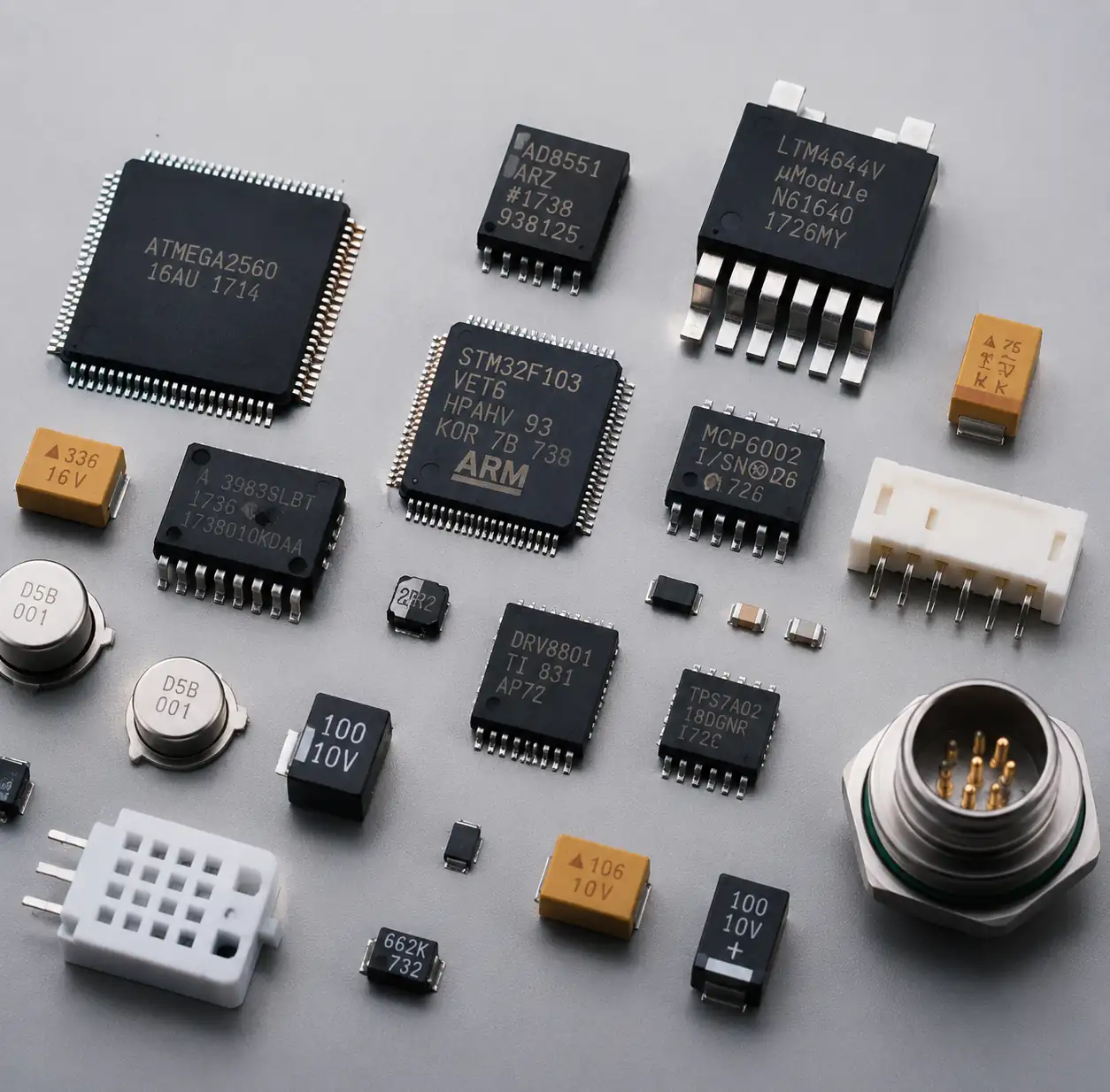 Composants électroniques de dispositifs médicaux, y compris les circuits intégrés, capteurs et connecteurs pour les systèmes de surveillance des patients
Vous devez spécifier les composants avec une MTBF dépassant 1 000 000 d’heures, de préférence des classifications automobiles ou industrielles. Les fabricants de dispositifs médicaux doivent mettre en œuvre des contrôles de conception conformément à FDA 21 CFR Part 820.30 et à la clause 7.3 de l’ISO 13485, exigeant une justification documentée de la sélection des composants, une analyse des risques selon ISO 14971 et des preuves de tests de vérification.
Les défaillances de composants entraînent des rapports obligatoires des dispositifs médicaux de la FDA et des rappels potentiels. Selon les données de la FDA, les problèmes liés aux composants contribuent à environ 15 à 20 % des rappels de dispositifs médicaux, rendant la qualification des fournisseurs essentielle à la protection des patients.
IEC 60601 Exigences de sécurité électrique
IEC 60601-1 établit les exigences générales pour la sécurité de base et les performances essentielles des équipements médicaux électriques. Cette norme internationale traite des dangers électriques, des risques mécaniques, thermiques et de la compatibilité électromagnétique pour les dispositifs en contact avec les patients ou opérant dans des environnements de santé.
La norme définit trois niveaux d’isolation : isolation de base, isolation supplémentaire et isolation renforcée. Les composants utilisés dans les pièces appliquées par le patient (Type B, BF ou CF) doivent fournir une isolation renforcée — équivalente à deux couches d’isolation de base — afin d’éviter les chocs électriques en cas de défaut unique.
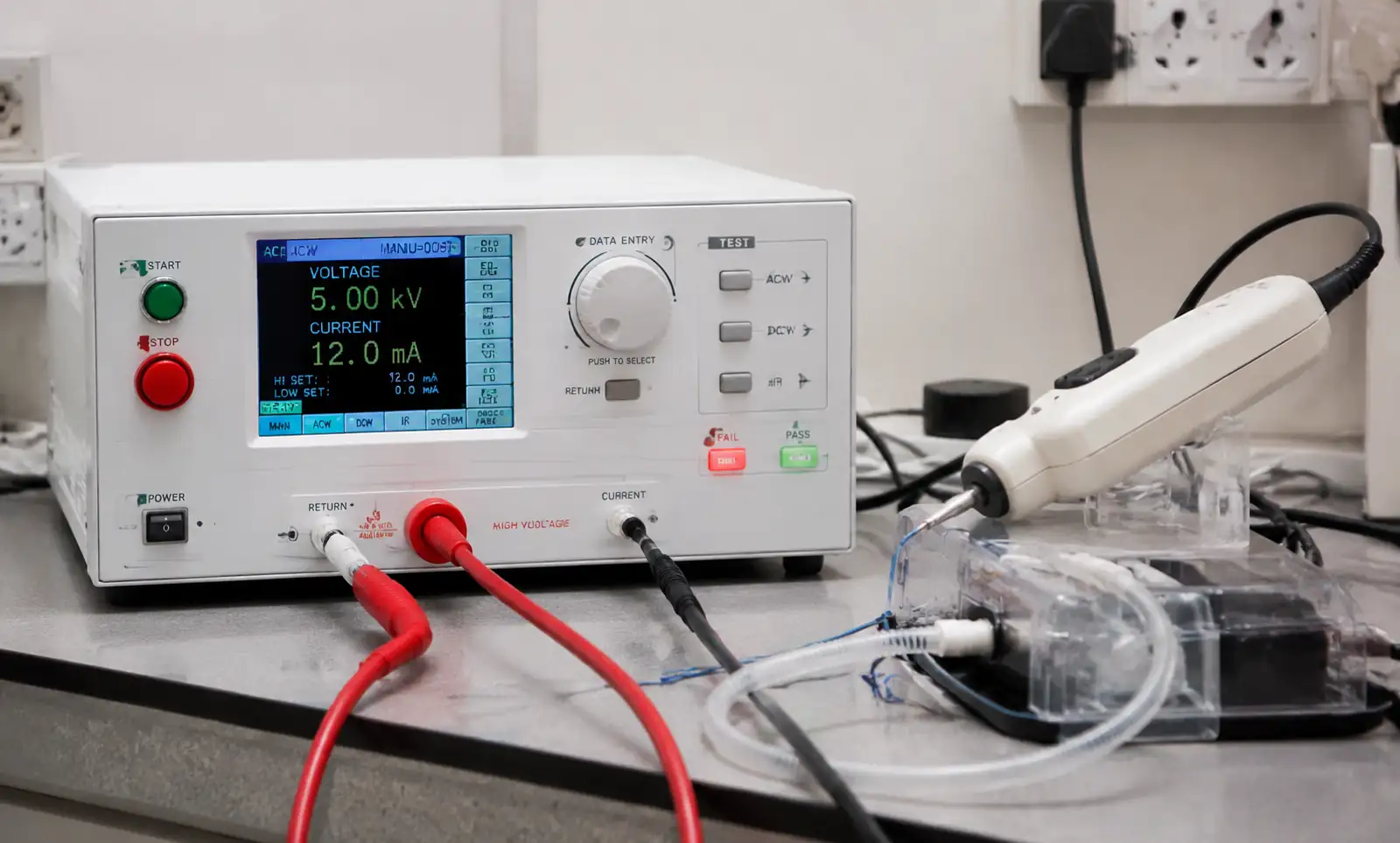 IEC 60601 Équipements de test de sécurité électrique pour la vérification des composants de dispositifs médicaux
Paramètres clés IEC 60601 pour les composants
| Paramètre | Type B | Type BF | Type CF | Méthode d’essai |
|---|---|---|---|---|
| Fuite du patient (normale) | <100μA | <100μA | <10μA | IEC 60601-1 Clause 8.7.3 |
| Fuite du patient (défaut) | <500μA | <500μA | <50μA | IEC 60601-1 Clause 8.7.4 |
| Isolation (Base) | 1500V AC | 1500V AC | 1500V AC | Le diélectrique résiste aux années 60 |
| Isolement (renforcé) | 3000V AC | 3000V AC | 4000V AC | Le diélectrique résiste aux années 60 |
| Creepage (Renforcé) | 5,0 mm min | 5,0 mm min | 5,0 mm min | Mesure de conception |
Les circuits intégrés d’alimentation, optocoupleurs et isolateurs numériques entre les circuits du secteur et les pièces du patient doivent respecter une isolation renforcée. Vérifier les classifications d’isolation dans les fiches techniques et s’assurer que la disposition du PCB maintient le fluage et le jeu requis conformément aux Tables 13 et 14 de la norme IEC 60601-1.
ISO 13485 et exigences FDA des fournisseurs
ISO 13485:2018 précise des exigences de gestion de la qualité mettant l’accent sur la conformité réglementaire, la gestion des risques et la traçabilité complète, des matières premières à la livraison par l’utilisateur final.
Pour les achats, l’ISO 13485 exige une évaluation documentée des fournisseurs (clause 7.4.1), une inspection entrante (clause 7.4.3) et des systèmes de traçabilité reliant les composants aux numéros de série des dispositifs (clause 7.5.8). Vos fournisseurs doivent maintenir la certification ISO 13485.
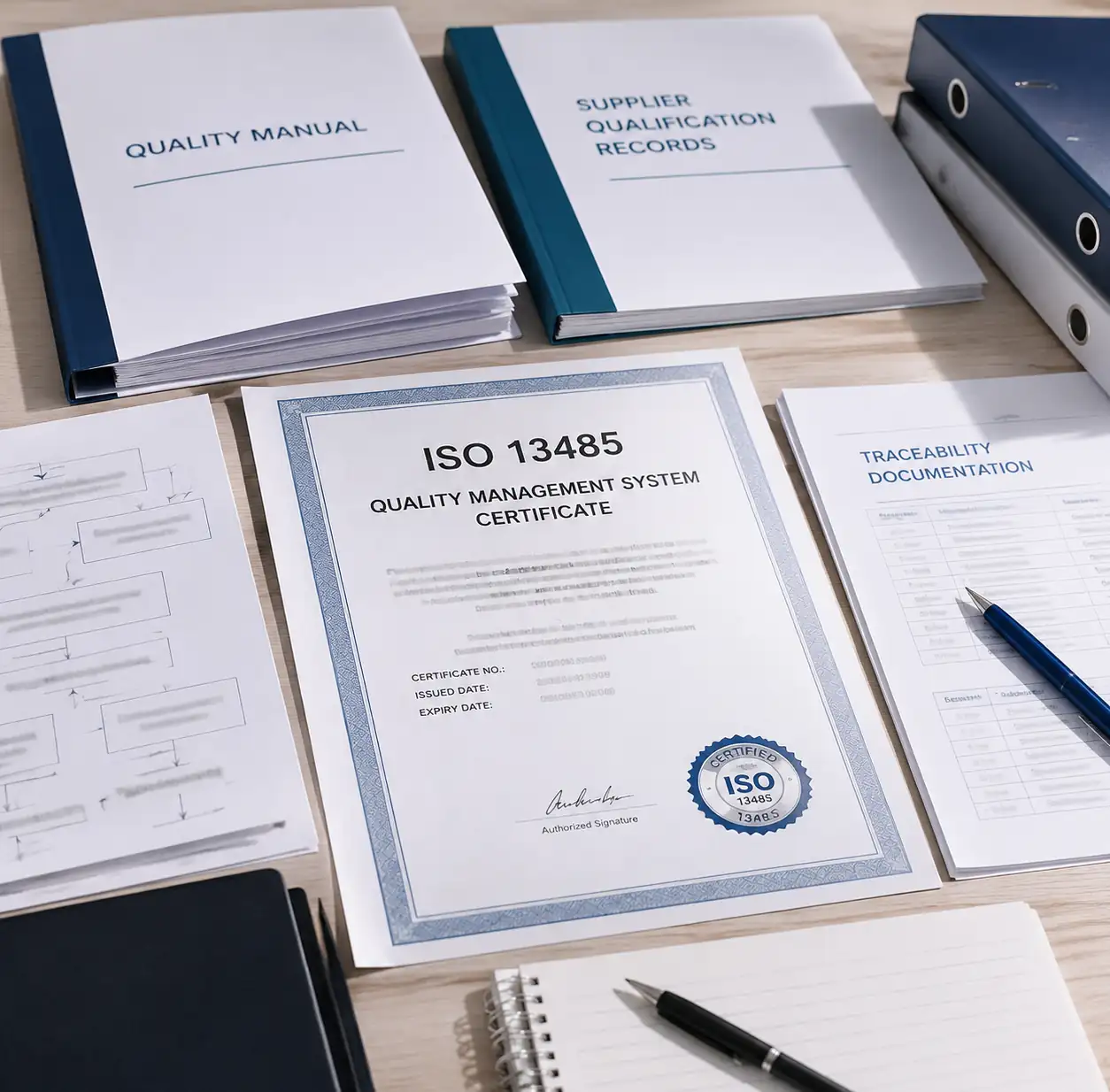 Documents et certifications du système de gestion de la qualité ISO 13485
Exigences clés des fournisseurs :
- Contrôle de procédé : Contrôle statistique des procédés avec Cpk ≥ 1.33 pour les paramètres critiques
- Notification de modification : préavis minimum de 90 jours avec évaluation d’impact
- Traçabilité des lots : Codes de lot uniques avec conservation des dossiers sur 10 ans
- Certificat de conformité : Vérification documentée pour chaque lot expédié
FDA 21 CFR § 820.50 impose des contrôles d’achat pour garantir que les produits respectent les spécifications. directives FDA recommande des intervalles d’audit ne dépassant pas 12 mois pour les fournisseurs critiques, avec des audits plus fréquents pour les dispositifs de classe III ou les fournisseurs présentant des problèmes de qualité.
Critères de sélection des composants
La sélection des composants pour les dispositifs médicaux nécessite une évaluation au-delà des spécifications électriques standard. Considérez la conformité réglementaire, la disponibilité à long terme, les données de fiabilité et la stabilité des fournisseurs tout au long du cycle de vie attendu du produit de 7 à 10 ans.
| Critères | Dispositif médical | Consommateur/Industriel | Impact |
|---|---|---|---|
| MTBF | >1 000 000 heures | >100 000 heures | Risque pour la sécurité du patient |
| Température de fonctionnement | -10°C à +55°C | 0°C à +70°C | Environnement clinique |
| Cycle de vie | Minimum 7-10 ans | 2 à 5 ans typiques | Gestion de l’obsolescence |
| Déclaration matérielle | Divulgation complète | Divulgation limitée | Évaluation de la biocompatibilité |
| Droits d’audit | Audits clients/réglementations | Souvent restreint | Vérification réglementaire |
 Processus d’audit qualité des fournisseurs de dispositifs médicaux et d’inspection de fabrication
Les CI de gestion de puissance doivent spécifier des classifications d’isolation conformes à la norme IEC 60601, un courant de fuite faible (<10μA pour le type CF) et des caractéristiques de protection (OVP, OCP, UVLO, arrêt thermique). Les microcontrôleurs devraient offrir des plages de température étendues et des feuilles de route produits stables. Les composants passifs nécessitent des déclarations de matériaux soutenant la revue de biocompatibilité. Les composants certifiés de qualité automobile (AEC-Q200 pour les passifs, AEC-Q100 pour les actifs) démontrent une fiabilité accrue.
Processus de qualification des fournisseurs
La qualification des fournisseurs de dispositifs médicaux évalue la capacité technique, les systèmes de qualité, la conformité réglementaire et la stabilité de l’entreprise. La qualification complète nécessite généralement 3 à 6 mois pour les nouveaux fournisseurs de composants critiques.
Étape 1 : Évaluation sur le bureau (2-4 semaines)
Examinez la documentation incluant le certificat ISO 13485, les licences commerciales, les rapports de stabilité financière, les diagrammes de flux de processus, les procédures qualité, les dossiers d’étalonnage et les déclarations de matériaux (RoHS, conformité REACH).
Étape 2 : Évaluation par exemple (4-8 semaines)
Effectuer des tests de vérification de conception, y compris la vérification des paramètres électriques, des tests environnementaux (cycle de température selon IEC 60068-2-14, humidité selon IEC 60068-2-78), et des tests accélérés de durée de vie pour l’estimation de la fiabilité.
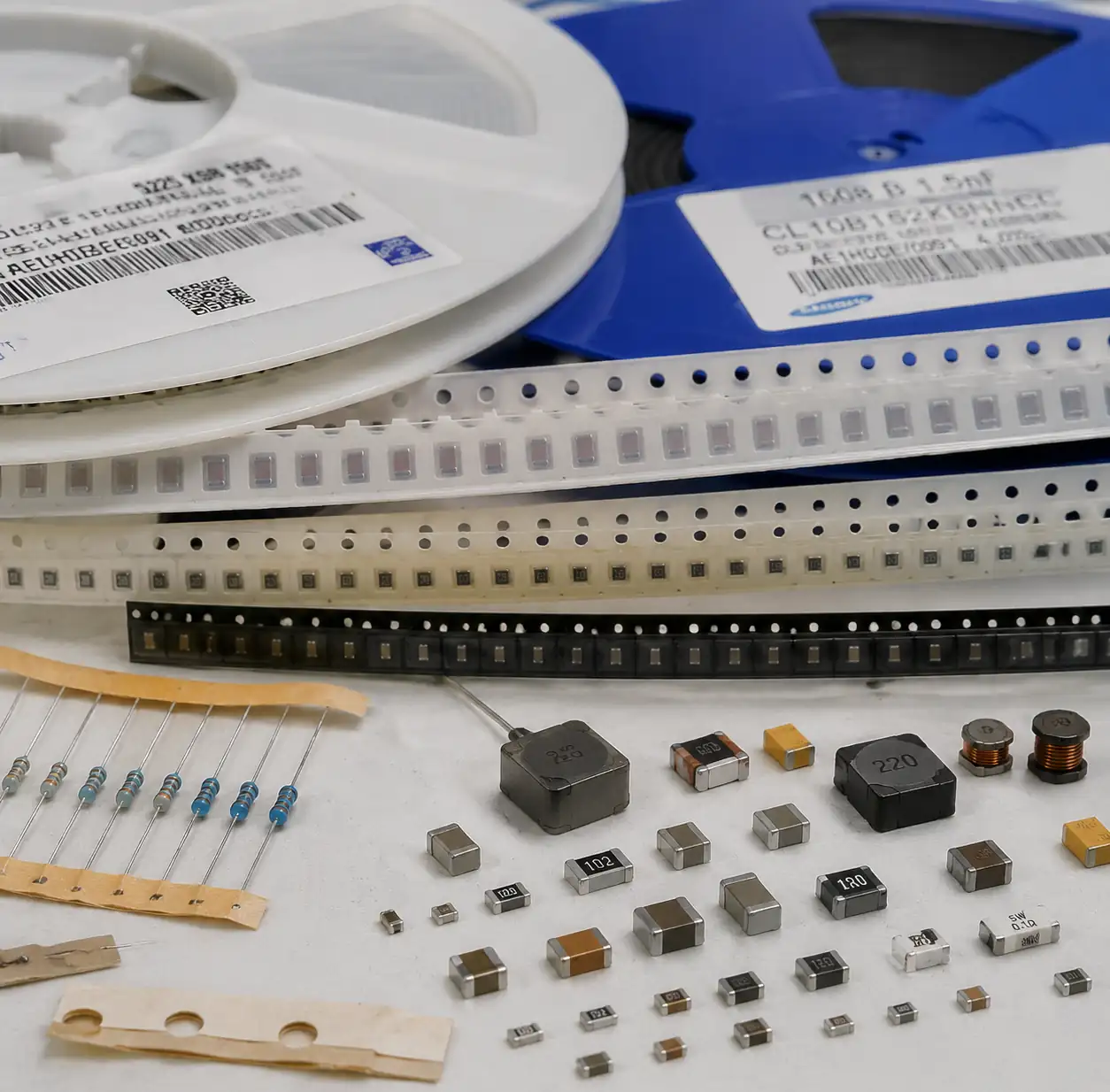 Composants passifs de qualité médicale, y compris condensateurs et résistances, avec marquage de traçabilité
Étape 3 : Audit sur site (1-2 semaines)
Pour les dispositifs de classe III ou composants appliqués par le patient, réalisez un audit sur site couvrant la revue des processus de fabrication, l’évaluation du système qualité, la vérification de l’étalonnage des équipements de test, la démonstration du système de traçabilité et la revue du processus de contrôle des changements. Documentez les conclusions et exigez des plans d’action corrective avant l’approbation finale.
Phase 4 : Production initiale (8-12 semaines)
Passez une commande de production initiale avec une inspection améliorée entrante. Effectuer un examen visuel et des tests électriques à 100 % sur la base d’un échantillon (10 % de la quantité ou minimum 30 pièces). Vérifiez la traçabilité des lots, l’exactitude des certificats et la performance de livraison. Après avoir réussi 2 ou 3 commandes, approuver le fournisseur à AVL avec des dossiers de qualification maintenus pendant 10+ ans.
Traçabilité et documentation
La réglementation des dispositifs médicaux exige une traçabilité complète des matières premières composantes jusqu’à la distribution des dispositifs et la livraison par l’utilisateur final. Les composants électroniques doivent porter une identification unique des lots liant aux enregistrements de fabrication, aux résultats des tests et aux données des matériaux.
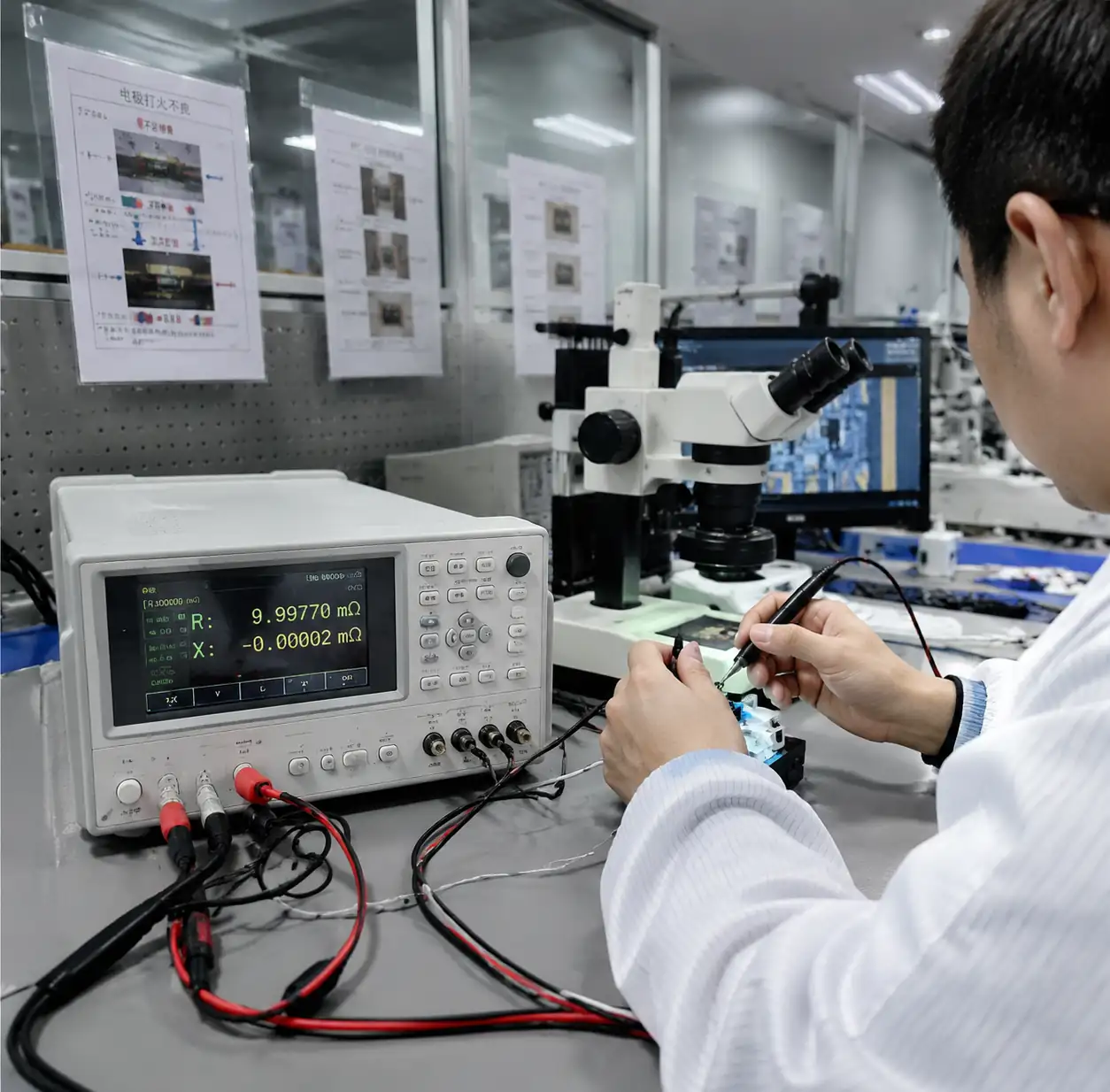 Essais et vérifications électriques des composants en laboratoire de contrôle qualité
Votre système d’approvisionnement doit capturer :
- Traçabilité des lots composants : Liez chaque lot au code fournisseur, au code de date et au lieu de production avec traçabilité bidirectionnelle
- Certificat de conformité : Vérification des spécifications pour chaque lot avec une conservation de 10 ans
- Déclarations de matériel : Conformité RoHS, déclarations REACH SVHC, rapports sur les minerais de conflit
- Notifications de changement : Tous les dossiers PCN contenant des preuves d’évaluation et de validation d’impact
- Dossiers d’audit des fournisseurs : rapports de qualification initiaux et résultats de réaudits périodiques
FDA 21 CFR Partie 820.65 exige une traçabilité pour les dispositifs où la défaillance pourrait causer des blessures graves. Article 27 de la MDR de l’UE impose la traçabilité de la chaîne d’approvisionnement en support des systèmes d’identification unique des dispositifs (UDI).
Biocompatibilité pour les composants électroniques
Les composants contactant directement ou indirectement les patients par migration de matériaux nécessitent une évaluation de biocompatibilité selon la série ISO 10993.
 Système électronique de traçabilité des lots à composants avec numérisation de codes-barres et suivi de bases de données
ISO 10993-1:2018 établit une évaluation de biocompatibilité basée sur le risque. Catégorisez le type de contact de l’appareil (surface, communication externe ou implant) et la durée (limitée ≤24h, prolongée >24h à 30 jours, ou permanente >30 jours) pour déterminer les critères de test requis.
Les principaux critères d’évaluation des composants électroniques incluent la cytotoxicité (test d’extraction en culture cellulaire), la sensibilisation (évaluation de la réponse allergique), l’irritation (réaction locale des tissus) et la caractérisation des matériaux (analyse chimique identifiant les extractibles et les lixiviables à l’aide de GC-MS, LC-MS, ICP-MS).
Les matériaux nécessitant une attention incluent les boîtiers polymères (boîtiers IC, connecteurs), les plaques de contact (broches de connecteur, finition PCB), les adhésifs et les composés de rempotage, ainsi que les matériaux pour PCB (substrat FR-4, masque de soudure, soudure sans plomb). Demandez des déclarations matérielles auprès des fournisseurs documentant toutes les substances contactant les patients.
Différences réglementaires régionales
La réglementation des dispositifs médicaux varie à l’échelle mondiale, affectant la sélection des composants et les stratégies des fournisseurs. Comprendre les différences régionales aide à prioriser les efforts de conformité et à sélectionner des fournisseurs soutenant plusieurs marchés.
| Région | Standards | Exigences fournisseurs | Chronologie |
|---|---|---|---|
| États-Unis | IEC 60601, ISO 10993, 21 CFR 820 | ISO 13485 ou FDA QSR | 510(k) : 3-12 mois ; PMA : 12-24+ mois |
| Union européenne | IEC 60601, ISO 13485, normes EN | ISO 13485 obligatoire ; EUDAMED à partir de 2026 | Marquage CE : 6-18 mois |
| Japon | JIS T (IEC harmonisé), ISO 13485 | ISO 13485 plus PMDA GMP | 12-18 mois |
| Chine | GB/YY (IEC harmonisé), YY/T 0287 | ISO 13485 avec immatriculation NMPA | 12-24 mois |
Préparation d’échantillons pour les tests de biocompatibilité pour les composants de dispositifs médicaux
Lorsqu’il s’agit de cibler plusieurs marchés, sélectionnez des fournisseurs certifiés ISO 13485 (qui satisfait la FDA QSR, L’EU, MDR et la plupart des autorités mondiales), une compréhension des exigences régionales, des capacités de support régionales et une conformité maintenue aux matériaux (RoHS, REACH, Proposition 65).
Le MDR de l’UE exige que les codes UDI relient les dispositifs à la documentation technique, étendant la traçabilité au niveau des composants. Depuis mai 2026, tous les nouveaux appareils nécessitent une immatriculation EUDAMED avant leur mise sur le marché.
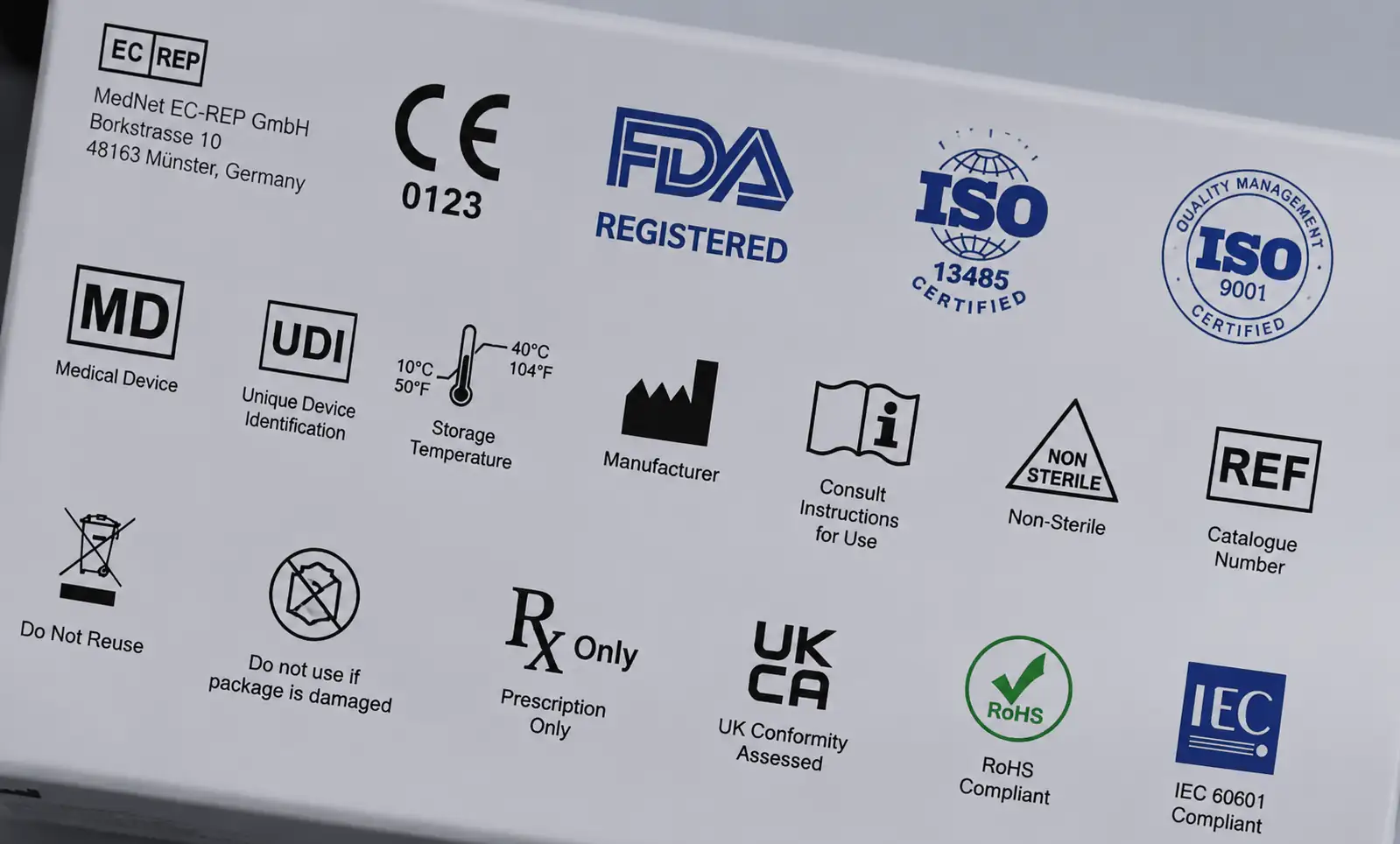
Marques mondiales de certification réglementaire des dispositifs médicaux, y compris CE, FDA et des normes internationales
FAQ
Les fournisseurs de composants ont-ils besoin de la certification ISO 13485 ?
La certification ISO 13485 n’est pas légalement requise mais est devenue la norme industrielle. Les fabricants préfèrent les fournisseurs certifiés car cela démontre la maturité du système de qualité et simplifie la qualification. Sans certification, les fournisseurs font l’objet d’audits plus rigoureux et peuvent être exclus des listes de fournisseurs approuvés.
Combien de temps les registres de traçabilité doivent-ils être conservés ?
La FDA exige une durée de vie de l’appareil plus un minimum de 2 ans. Pour les dispositifs de classe III et implantables, conservez les dossiers pendant la durée de vie du dispositif plus 7 à 10 ans. La MDR de l’UE exige 10 à 15 ans selon la classification. Le PMDA japonais exige 15 ans pour les dispositifs de classe IV. Suivez l’exigence la plus stricte — généralement la RDM européenne ou le Japon.
Les composants de qualité automobile peuvent-ils être utilisés dans des dispositifs médicaux ?
Les composants de qualité automobile (certifiés AEC-Q) offrent une grande fiabilité mais ne satisfont pas automatiquement aux exigences médicales. Les normes automobiles ne traitent pas de biocompatibilité ni de CEM spécifique à des raisons médicales selon IEC 60601-1-2. Vous pouvez utiliser des composants de qualité automobile si vous vérifiez qu’ils répondent aux spécifications médicales et que vous vous approvisionnez auprès de fournisseurs disposant de systèmes de qualité médicale appropriés.
Quelle documentation les fournisseurs doivent-ils fournir pour les soumissions à la FDA ?
Les fournisseurs doivent fournir le nom et l’adresse du fabricant, les numéros de pièce et les spécifications, la composition des matériaux pour les pièces en contact avec le patient, la compatibilité en matière de stérilisation (le cas échéant), les rapports ou déclarations de biocompatibilité des matériaux, les certificats de conformité et les procédures de contrôle des modifications. Pour les composants critiques, incluez la certification du système qualité et un résumé d’audit récent.
Conclusion
L’approvisionnement en composants électroniques pour les dispositifs médicaux exige une attention rigoureuse aux normes réglementaires, à la qualification des fournisseurs et à la traçabilité allant au-delà de l’approvisionnement en électronique commerciale. Le cadre se concentre sur la sécurité électrique IEC 60601, la gestion de la qualité ISO 13485, ainsi que sur les réglementations régionales telles que la FDA 21 CFR 820 et la MDR européenne.
Le succès de l'[achat de composants] de dispositifs médicaux (/procurement.html) nécessite une évaluation structurée des fournisseurs par un examen bureau, une évaluation d’échantillons et des audits sur site, ainsi que des accords complets de qualité et une traçabilité documentée. Vérifier les systèmes de qualité des fournisseurs via la certification ISO 13485 et des audits périodiques, mettre en place un contrôle des modifications capturant toutes les modifications, et maintenir la documentation des matériaux soutenant les évaluations de biocompatibilité.
Si vous fabriquez des dispositifs médicaux et avez besoin d’un approvisionnement fiable en composants avec un soutien réglementaire, Hitop Tech propose des services d’approvisionnement spécialisés. Notre réseau de fournisseurs comprend des partenaires certifiés ISO 13485 avec des capacités de traçabilité complètes et une expérience en soutien aux soumissions MDR de la FDA et de l’UE. Contactez-nous dès aujourd’hui pour l’approvisionnement en composants de dispositifs médicaux, le soutien à la qualification des fournisseurs et l’assistance à la documentation réglementaire.